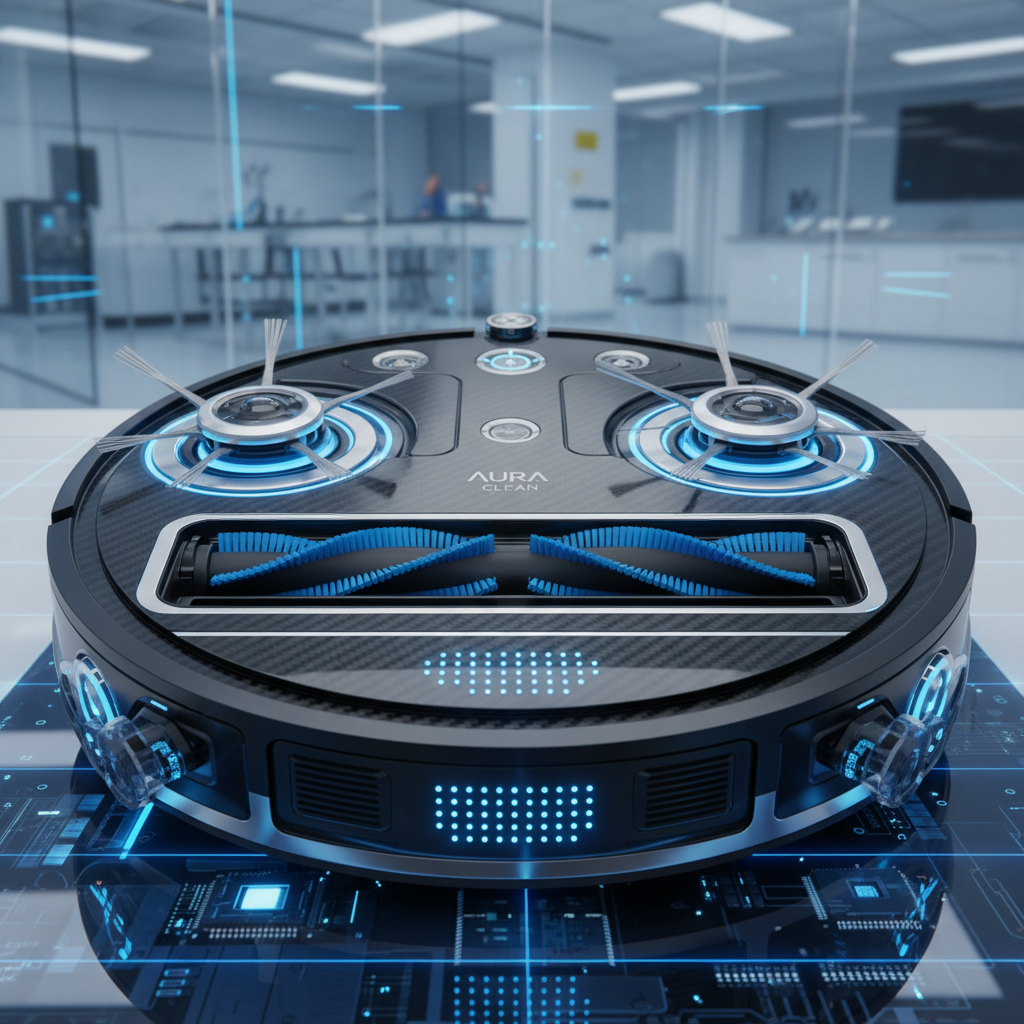
Navigating the Maze: The Precision of LiDAR and vSLAM Systems
Gone are the days when robot vacuums would aimlessly bump into furniture like a blind explorer in a cavern. Modern cleaning companions now utilize sophisticated navigation technologies that allow them to ‘see’ and ‘understand’ their environment with remarkable accuracy. The two most prominent systems today are LiDAR (Light Detection and Ranging) and vSLAM (Visual Simultaneous Localization and Mapping).
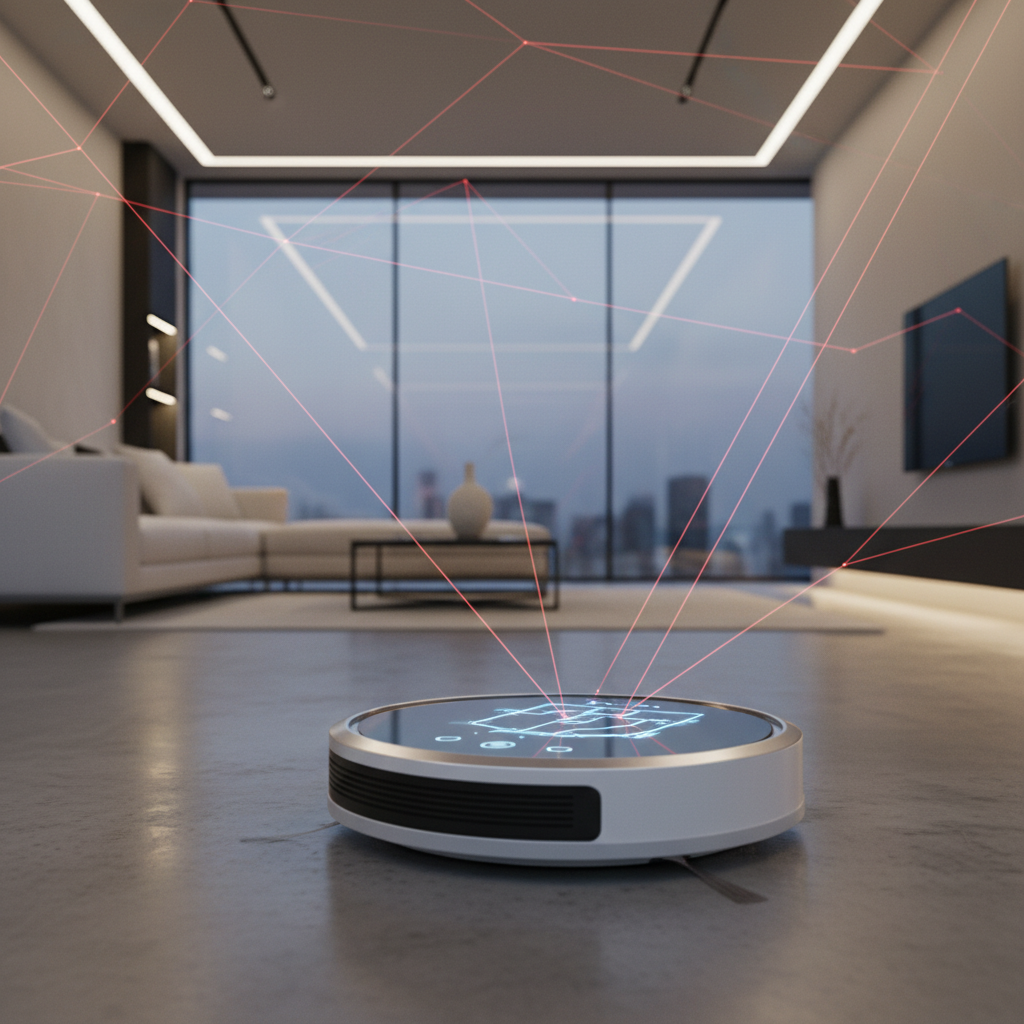
LiDAR works by emitting laser pulses that bounce off surfaces, creating a highly detailed 3D map of your home in real-time. This allows the robot to calculate the most efficient path, ensuring every inch of floor space is covered without repetitive overlapping. On the other hand, vSLAM uses a high-speed camera to identify landmarks in a room. While LiDAR is often praised for its precision in complete darkness, vSLAM excels at recognizing specific furniture types and layout changes, making it a powerful tool for dynamic households.
The Intelligence of Room Mapping and Zone Cleaning
Once the robot has successfully mapped your home, the true magic begins. Through dedicated mobile applications, users can now interact with these virtual maps to set ‘No-Go Zones’ or ‘Virtual Walls.’ If you have a corner with tangled computer cables or a delicate pet feeding station, you can simply draw a box on the map to tell the robot to stay away. This level of customization ensures that the cleaning process is not only thorough but also safe for your most fragile belongings.
Furthermore, zone cleaning allows you to prioritize high-traffic areas. Instead of running a full house cycle, you can command the robot to focus specifically on the kitchen after a messy cooking session or the entryway after the kids come home from school. This targeted approach saves battery life and ensures that the areas that need the most attention receive it immediately.
The Art of Mopping: From Wet Cloths to Sonic Scrubbing
For a long time, the mopping function on robot vacuums was merely an afterthought—essentially a wet rag being dragged across the floor. However, the latest generation of devices has transformed this into a deep-cleaning science. We now see the emergence of sonic mopping and pressurized scrubbing systems. Sonic mopping vibrates the cleaning pad thousands of times per minute, effectively breaking down stubborn, dried-on stains that a simple wipe would never budge.
In addition to vibration, some high-end models now feature retractable mop pads. This is a game-changer for homes with mixed flooring. When the robot detects carpet using ultrasonic sensors, it automatically lifts the damp mop pad to prevent your rugs from getting wet. Once it returns to hard flooring, the mop lowers back down to continue its work. This seamless transition allows for a truly autonomous ‘set it and forget it’ experience.
Hands-Free Maintenance: The Rise of Auto-Emptying Docks
One of the biggest pain points of early robot vacuums was the constant need to empty the tiny dustbin every day. This task often resulted in a cloud of dust being released back into the air, which was counterproductive for allergy sufferers. The introduction of auto-empty stations has solved this problem entirely. When the robot finishes its cycle and returns to the base, a powerful suction motor pulls all the debris into a much larger, sealed disposable bag.
These bags can typically hold weeks or even months of dust, meaning you only have to interact with the waste a few times a year. Modern stations have evolved even further to include:
- Self-washing mop systems that clean the pads with fresh water after every run.
- Hot air drying modules to prevent the growth of mold and unpleasant odors on damp mops.
- Automatic water tank refilling, ensuring the robot is always ready for a mopping session.
- Self-cleaning bases that prevent the buildup of sludge and hair within the dock itself.
AI Object Recognition: The End of the ‘Poopocalypse’
Perhaps the most impressive technological leap in recent years is the integration of Artificial Intelligence and neural networks for object recognition. Using front-facing cameras and dual-laser sensors, modern robots can identify specific objects on the floor, such as shoes, power cords, and even pet waste. This prevents the dreaded ‘poopocalypse’ where a robot might accidentally smear pet messes across the entire house.
This AI isn’t just a static database; it constantly learns and improves. Many manufacturers push over-the-air (OTA) updates that refine the robot’s ability to distinguish between a harmless sock and a hazardous obstacle. By combining computer vision with traditional infrared sensors, these machines can navigate complex environments with a level of grace that was once the stuff of science fiction.