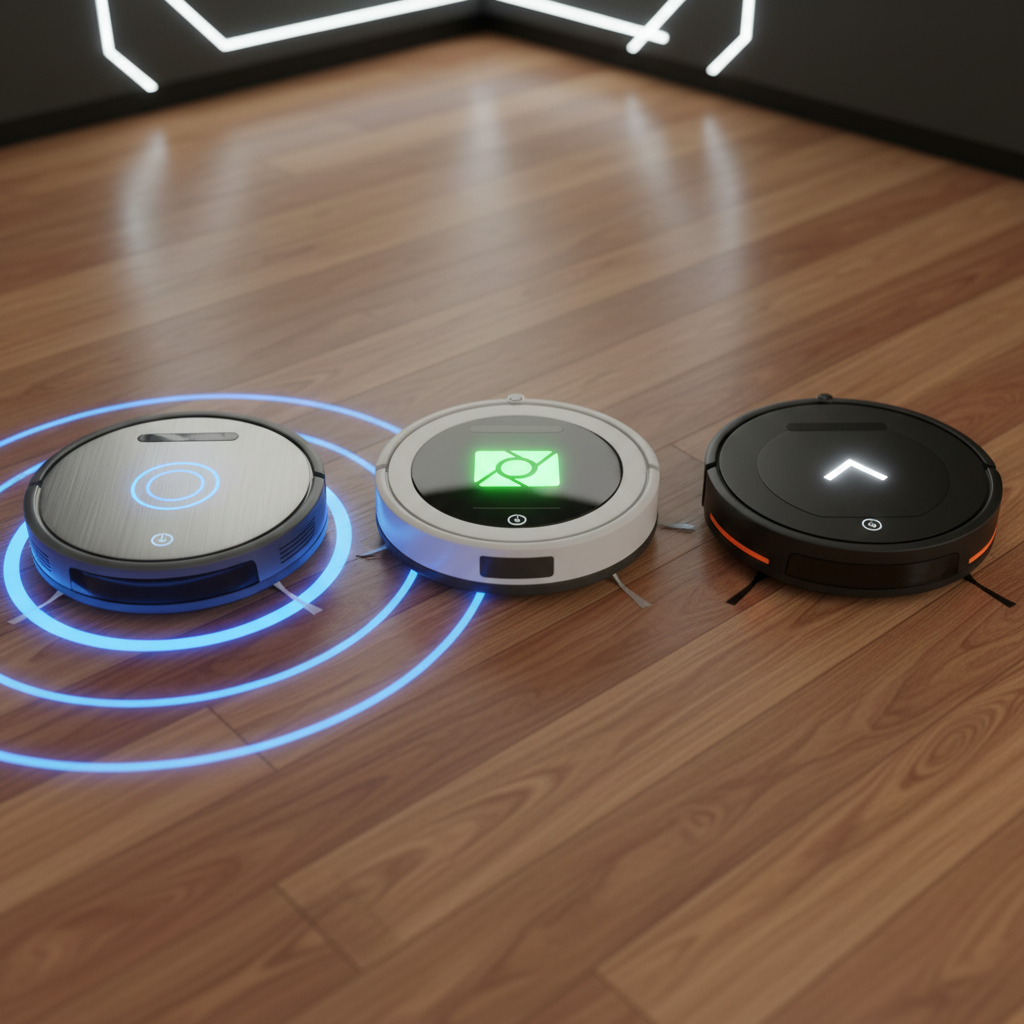
The Evolution of Smart Cleaning Intelligence
Gone are the days when robot vacuums were merely glorified bumper cars that bounced aimlessly from one wall to another until their batteries died. Today, these autonomous helpers have evolved into sophisticated pieces of technology capable of mapping complex floor plans with surgical precision. However, as you browse the market, you are likely bombarded with technical jargon like LDS, vSLAM, and Gyroscope navigation. Understanding these differences is not just about being tech-savvy; it is about choosing a device that actually fits the layout of your home.
The intelligence of a robot vacuum is primarily defined by its ability to answer three questions: Where am I? Where have I been? And where am I going? To answer these, manufacturers employ various sensory technologies that vary in cost, accuracy, and reliability. Whether you live in a sprawling multi-story villa or a cozy minimalist apartment, the navigation system is the brain that determines if your floors stay spotless or if your robot gets stuck under the sofa every single morning.
Gyroscope Navigation: The Practical Middle Ground
Gyroscope navigation is often found in mid-range or entry-level robot vacuums. Unlike the early ‘random’ models, gyroscopic robots use sensors to measure the rotation and orientation of the device. This allows the robot to move in a more calculated zig-zag or S-shaped pattern rather than wandering blindly. It essentially remembers the angle at which it turned, allowing it to cover the floor more systematically than its predecessors.
However, while a significant step up from basic models, gyroscope navigation has its limitations. Since it does not ‘see’ the room or build a permanent visual map, it relies on calculating its position based on the number of wheel rotations and the angles turned. Over time, small errors in wheel slippage or uneven surfaces can accumulate, leading to ‘drift.’ This means the robot might miss certain spots or struggle to find its way back to the charging base in larger, more complex homes.
Why Choose Gyroscope?
– Cost-effectiveness for budget-conscious buyers.
– Sufficient for small apartments with simple layouts.
– Lower profile design as it lacks bulky top-mounted sensors.
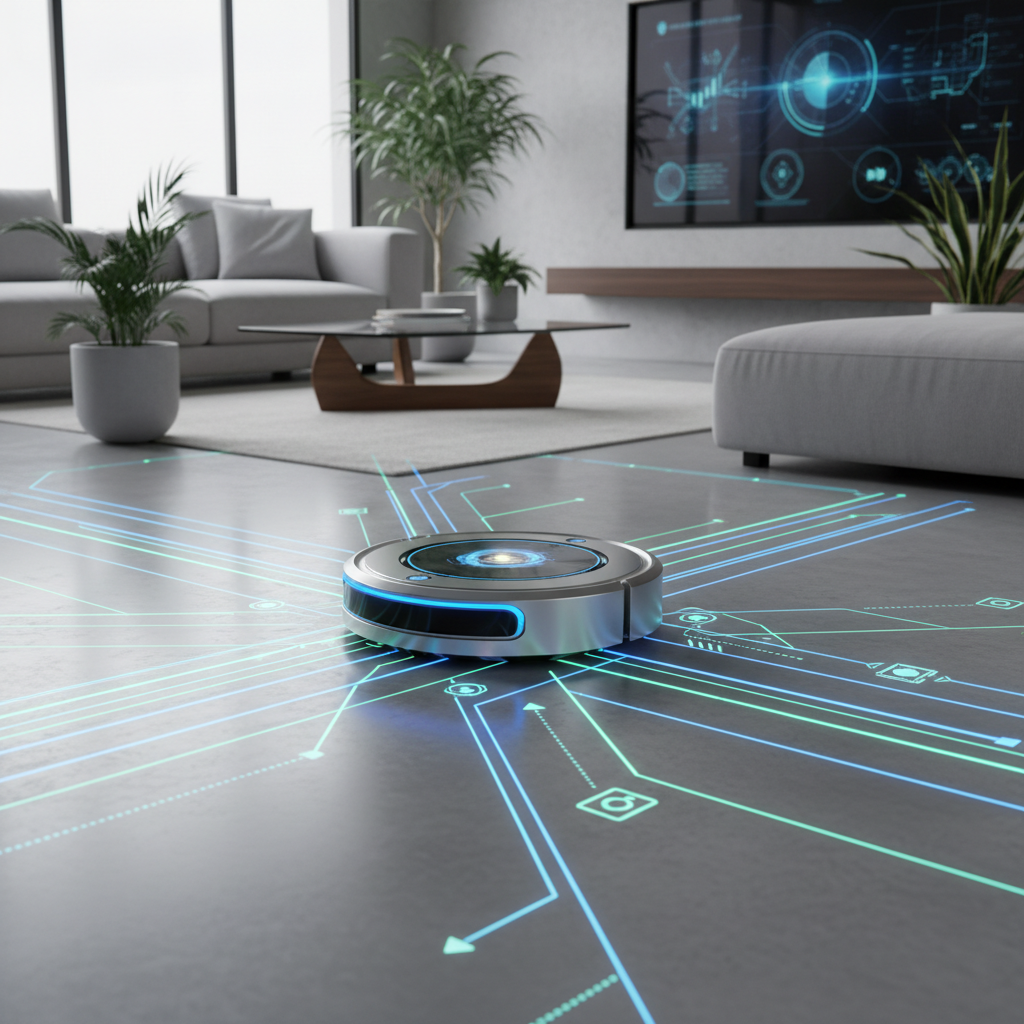
vSLAM and Camera-Based Navigation: The Visual Explorer
Visual Simultaneous Localization and Mapping, or vSLAM, utilizes a high-speed camera to capture images of the surroundings. By identifying fixed points in the room—such as the corners of a ceiling, the edge of a doorframe, or the position of a window—the robot creates a virtual map of your home. This technology is very similar to how humans navigate; we look around, recognize landmarks, and know where we are relative to those points.
One of the greatest advantages of camera-based navigation is the low physical profile. Because the camera is usually embedded flat on the top of the unit, these robots can easily slide under low-clearance furniture that might block a laser-equipped model. Furthermore, advanced AI-driven camera systems can now recognize specific objects like slippers, cables, or pet waste, allowing the robot to avoid obstacles that would otherwise cause a mechanical disaster. The main drawback? Cameras need light. If you prefer your robot to clean in total darkness while you sleep, a vSLAM model might struggle to orient itself.
LDS / LiDAR Navigation: The Gold Standard of Precision
Laser Distance Sensor (LDS), often referred to as LiDAR (Light Detection and Ranging), is widely considered the pinnacle of robot vacuum navigation. You can easily spot these robots by the small ‘turret’ spinning on top. This turret houses a laser that rotates 360 degrees multiple times per second, measuring the distance to every object in the room with millimeter precision. It builds a highly accurate 2D map of your home almost instantly, even before it starts moving.
Because LDS does not rely on light, it works perfectly in pitch-black rooms or under heavy furniture where a camera would fail. It is also incredibly efficient; because the map is so precise, the robot knows exactly where it has cleaned and where it hasn’t, leading to faster cleaning cycles and better battery management. The only real trade-off is the height of the robot; the laser turret adds about an inch to the device, which might prevent it from getting under very low-slung cabinets or beds.
Comparing the Heavyweights
– Precision: LDS is the most accurate, followed by vSLAM, then Gyroscope.
– Low-Light Performance: LDS and Gyroscope win; vSLAM struggles in the dark.
– Obstacle Avoidance: High-end vSLAM models with AI are currently the best at identifying specific objects.
– Price Point: Gyroscope is the cheapest, while LDS and vSLAM occupy the premium tiers.
Which One Should You Buy?
Selecting the right navigation technology depends entirely on your environment and lifestyle. If you have a large home with multiple rooms and a complex layout, investing in an LDS-based robot will save you the frustration of a ‘lost’ vacuum. The precision of laser mapping ensures that every corner is accounted for and that the robot can efficiently return to its dock to empty its bin and recharge.
On the other hand, if your home is filled with low-clearance furniture and you usually schedule cleanings during daylight hours, a camera-based vSLAM model might be the superior choice. For those in small, single-room studios or budget-friendly apartments, a gyroscope model offers a massive improvement over random-path vacuums without breaking the bank. Ultimately, understanding these sensors allows you to pick the right ‘brain’ for your home’s unique needs.